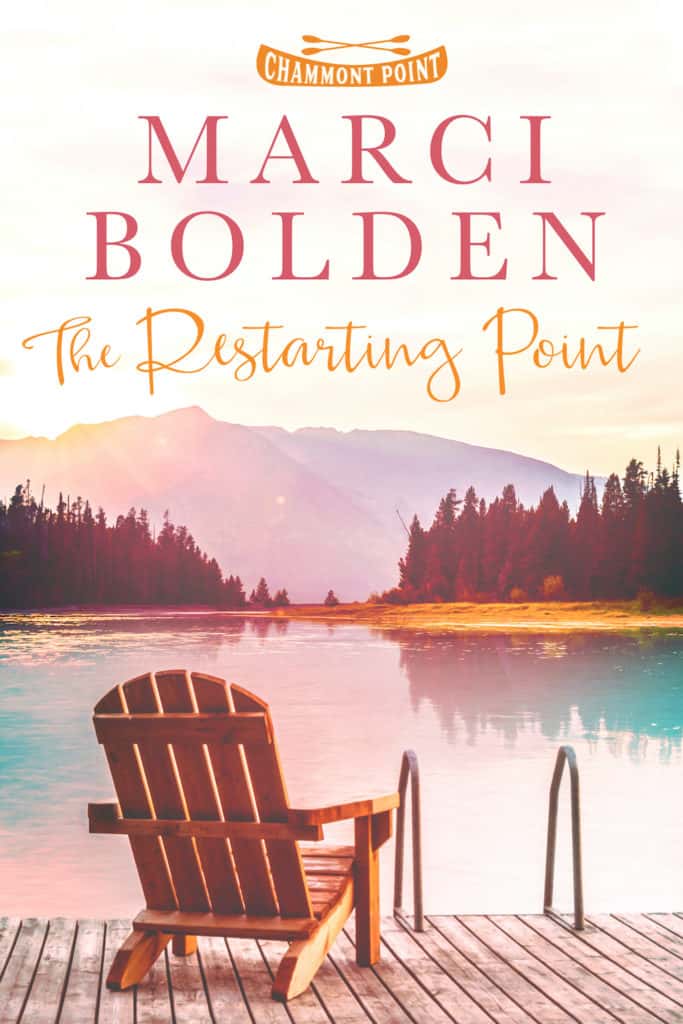
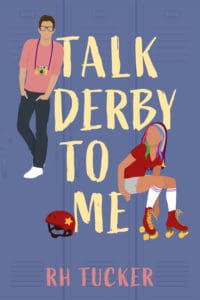
Marketing executive and mother of two, Jade Kelly can now add cancer survivor to her list of successes. But while her life looks good on paper, four months out of treatment, Jade realizes she hardly knows her college-age children and she and her husband Nick are little more than housemates.
Determined to start over, Jade schedules a family vacation to a lakefront cabin. When her kids bail and Nick stays home to handle a last minute work crisis, Jade heads to Chammont Point alone, determined to dust herself off and figure out what to do with the rest of her life.
While she’s away, the life she thought she had unravels. Secrets, lies, and old wounds drive Jade into new adventures and new relationships. With the help of family and new found friends, Jade learns starting over sometimes means finding a brand new restarting point.
Jade was thinking anything would be a welcomed distraction when the door swung open.
“Knock, knock,” Darby sang as she poked her head in without actually knocking. Nor did she wait for Jade to invite her in before entering. She held out a plastic container from the grocery store and lifted a bottle of wine. “I thought you might need these. I hope you like mint brownies and red wine.”
Jade had always adored both. However, she’d completely altered her diet after her diagnosis. She’d never been a heavy drinker, but as soon as she’d read that alcohol and junk food increased the risks for the type of cancer she’d had, she’d cut those indulgences from her life. She hadn’t had either in over a year. “You didn’t have to do that.”
After easing her offerings onto the table, Darby faced Jade. “Yes, I did. I am really glad your ankle didn’t get hurt worse. That’s definitely worth brownies and a moderately priced bottle of Malbec.” She grinned. “And…” She opened the door again, reached out, and then spun dramatically. “Look at these.” Darby beamed as she held up two gold-painted crutches covered in gems of varying size, shape, and color. “I dug them out of my closet for you to use as long as needed.”
Jade widened her eyes as she stared in shock. Gaudy was an understatement. The display before Jade was atrocious.
“Wow,” Jade said for lack of any other words. “Thanks.”
“I, too, sprained my ankle once.” Darby set the crutches against the coffee table and within Jade’s reach. “You should never do cartwheels on a stage. While wearing vinyl platform boots. And drinking heavily.”
“Yeah,” Jade said, drawing the word out a bit. She didn’t have to think too hard to see the image Darby had created. “That sounds like it would be a bad idea.”
“Speaking of drinking, let’s get to that wine.” Darby turned toward the table where she’d left the bottle.
“Oh, thanks, but I don’t drink,” Jade said.
Darby stopped, frozen in time for a few beats, and then spun around and cupped her ear as if she hadn’t heard. “I’m sorry, what?”
“I don’t drink. I had… It’s bad for my health. I’ll take a glass of water, though.” Jade could almost see the gears in the other woman’s brain spinning as she processed the information. Jade had almost slipped in the bit about her cancer, but sometimes the words still stuck deep in her chest like a fist not ready to release its hold. The ability to share her struggles as freely as she’d heard others with major illnesses do was not something she’d mastered. She suspected she’d get there, but that was a skill she had to work on.
“You don’t drink? How do you get through the day?”
Jade giggled as Darby stared with obvious confusion. “Slowly.”
As a teen, Marci Bolden skipped over young adult books and jumped right into reading women’s fiction and romance novels.
Marci lives in the Midwest with her husband, two kiddos, and numerous rescue pets. If she had an ounce of will power, Marci would embrace healthy living but until cupcakes and wine are no longer available at the local grocery store, she’ll put that ambition on hold and appease her guilt by reading self-help books and promising to join a gym “soon.”
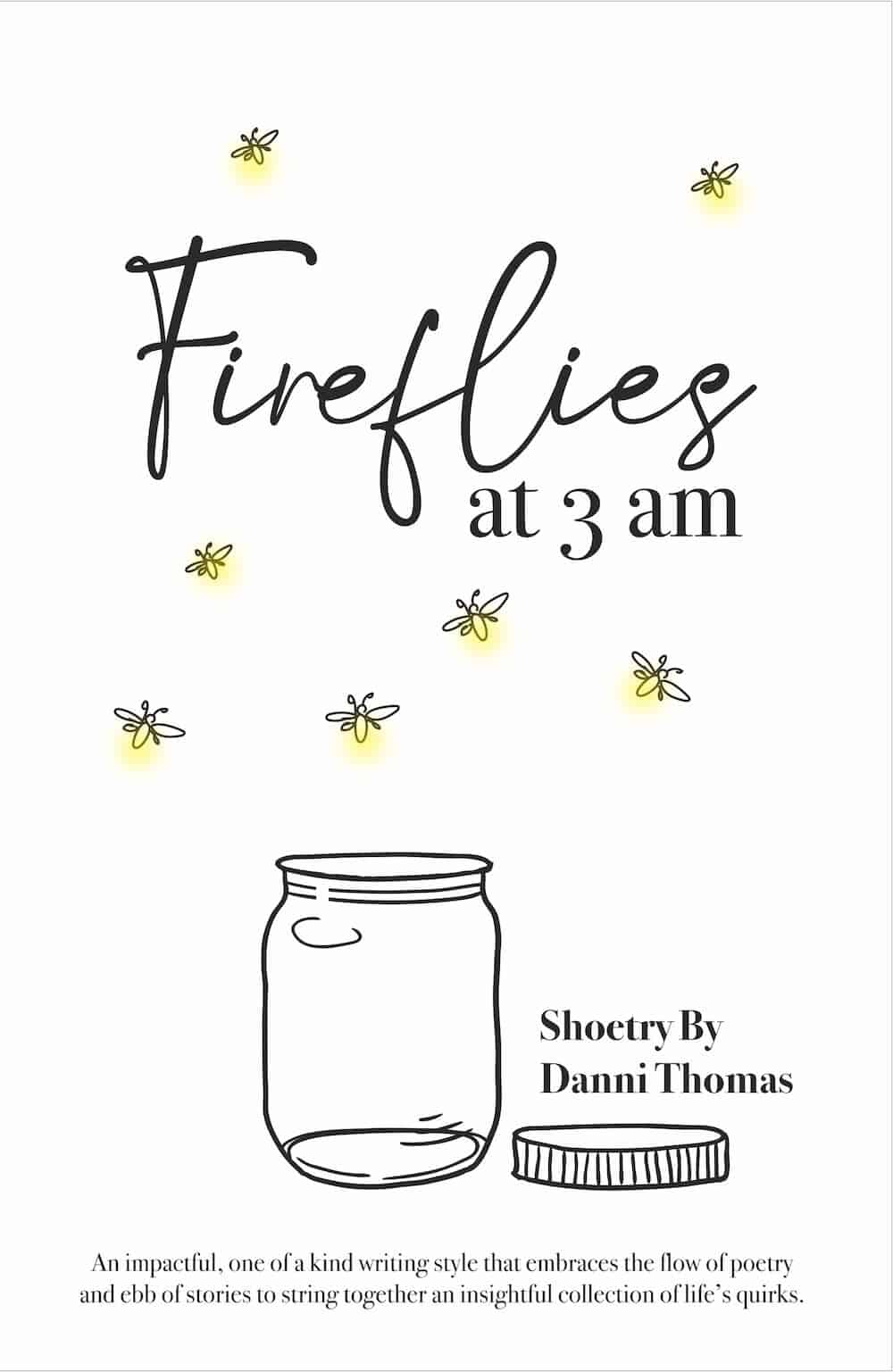
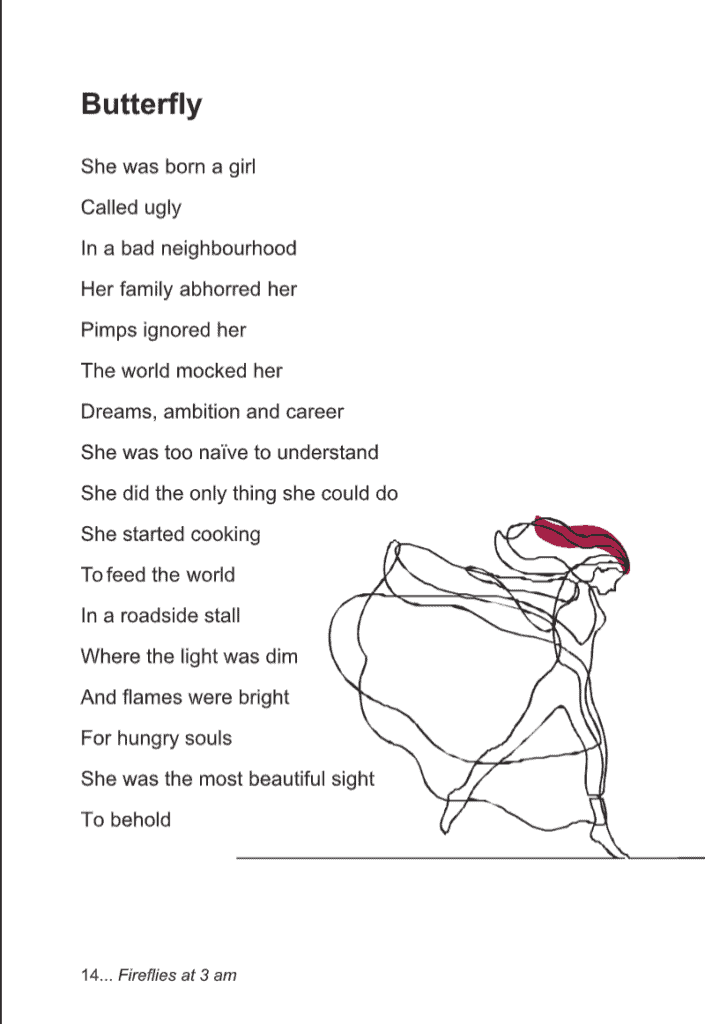
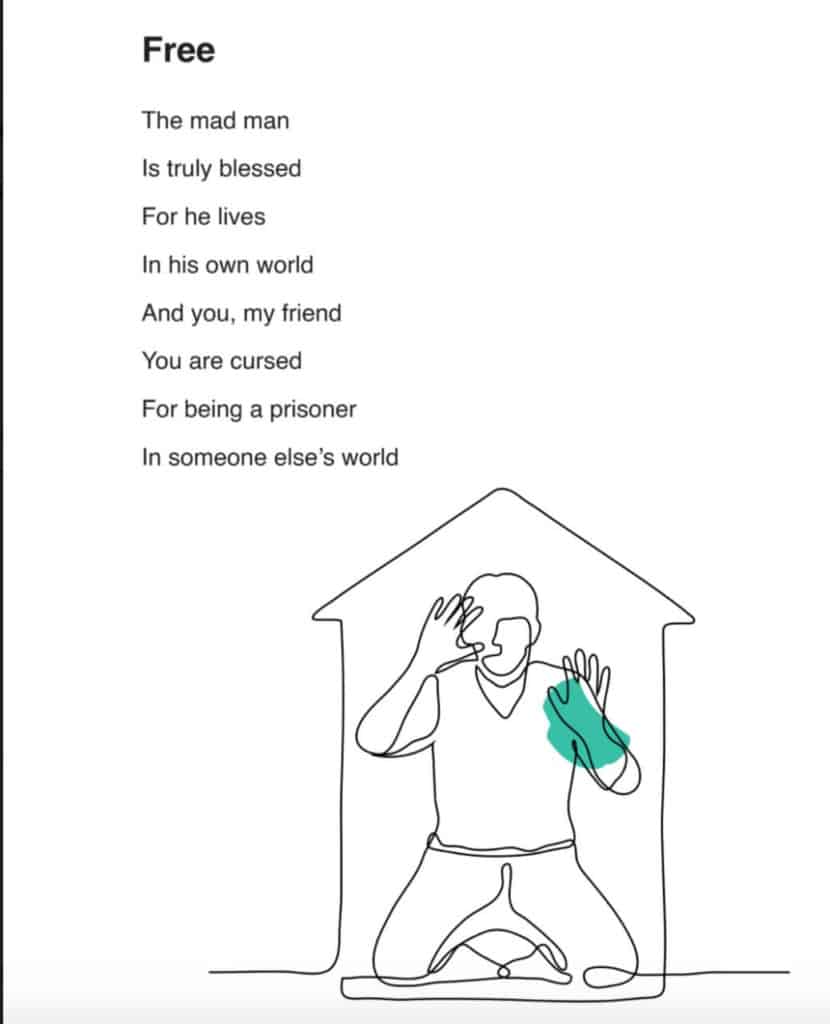
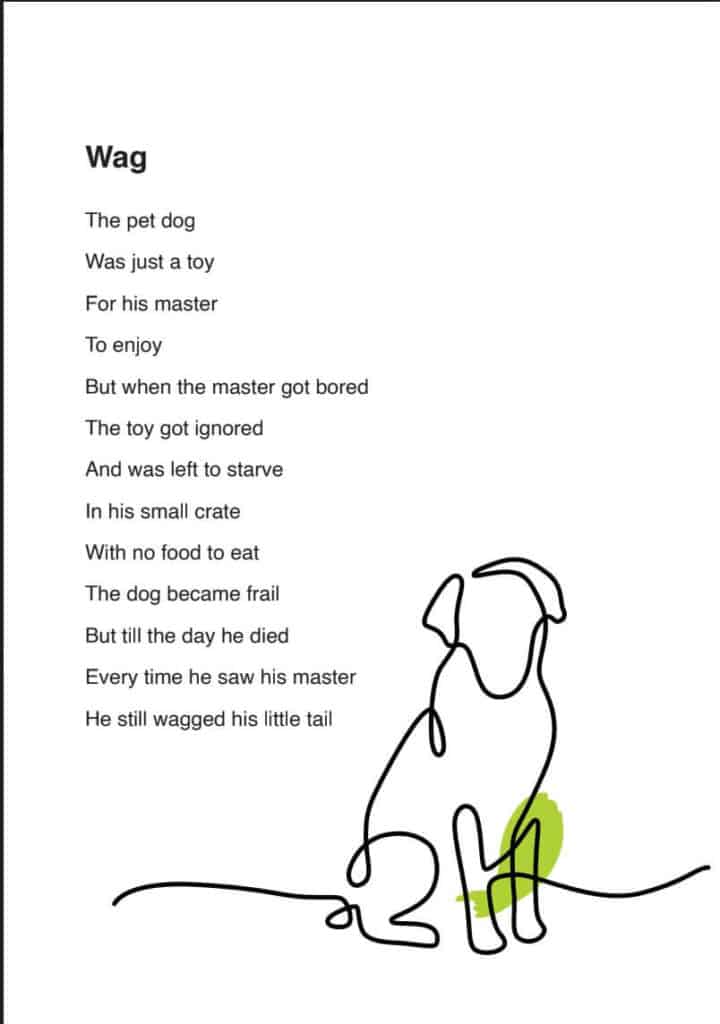
‘Fireflies at 3 am’ brings a landmark new genre to the world of literature. It’s a book with the flow of poetry but the ebb of short stories – rightfully called “Shoetry”.
This creation takes you to the roots of humanity – stripping back the veneers of life, society and interaction to see people and their ways in an entirely new light.
As a child, he was known to cook up stories to save his little ass or to pass his exams. Then he grew up a bit, only in age and size, and went to college. There, he wrote plays, won a few awards and was told to try his luck in advertising. Some kind soul, who had limited knowledge about advertising, told him that this field was all about wearing jeans to work and late-night parties. He needed no further persuasion, and without losing any more time, got into advertising.
Over the last 18 years, he worked at some of the biggest advertising agencies in the world, made some memorable ads, won international recognition for his work, and learned how to manage acid reflux. Life was OK, but he decided to complicate it by writing a book.
People nowadays avoid him like the plague lest he ask them to review his work. His children have started studying harder and his wife has taken up baking so that they can escape his nagging requests, every now and then, to read what he’s written. But all said and done, none of that has dampened his spirits. Currently, he is looking forward to selling over a million copies and is busy convincing each of his friends to buy more than 3 copies of the book. Sucker.
Title:Cemetary Songs Author: Julie Gilbert Genre: Young Adult, Contemporary Fiction
Poignant and uplifting, Cemetery Songs is a compelling YA about a girl, a ghost, and the graveyard that sends them both on a journey of self-acceptance.
When Polly Stone’s birthmother dies, she feels lost and adrift. How do you mourn someone you never knew? Even the dead, whose final thoughts Polly can hear, offer no advice.
Instead Polly fails her classes, alienates her friends, gets fired from her summer job, and accidentally sets fire to the high school. At a loss, Polly’s parents ground her and insist she volunteer at the local archives.
The dusty boxes are boring, but Polly is intrigued by her assignment: mapping an abandoned Black settlement on the edge of town. At the very least, it gives her time to examine her confused feelings for Billy Meyer, a former classmate who is also blackmailing her.
Amid weedy tombstones, Polly and Billy encounter the charming ghost of Harrison Card, who died in 1924. Sensing there’s more to the story than Harrison can recall, the unlikely trio investigates the mysterious circumstances surrounding his death.
The discoveries are unnerving, especially since the ugly racist history reflects some of Polly’s own experiences as a biracial teenager. Past and present collide when Polly’s attempts to help Harrison go tragically wrong. As Polly grapples with the consequences of her actions, she must decide if she is brave enough to heed the wisdom of the dead.
“You about ready?” I ask as I sit in the grass at the corner of the gravestone.
“Sure,” Billy says, sitting back on his heels. He swings the flashlight to illuminate his handiwork. A series of objects is arranged around the perimeter of the grave. Nearest me is a chipped coffee mug with the Monroe city logo on it. Next to that there’s a single golf glove and a pile of tees. A worn dog leash curls in the corner, nestled against a plastic water dish.
“He’s the guy who died at his desk, isn’t he?” I ask. “Like two weeks ago or something.” My mom mentioned it over dinner the other night, the city employee who’d been physically fit but plagued with anger management issues. Apparently he died in the middle of a conversation.
“Yeah, that’s him. You know him?” “No, but I’m about to.” I wrap my hands around the mug, drawing in a few deep, clean breaths and turning my attention to Arnold Weber, sliding into his mind, or whatever’s left of it. He died during an argument, I learn. What the hell, Scott? was his final thought. I hold the mug tighter and images start to appear in my mind. I see the inside of an office paneled in wood and carpeted in gray. There’s an industrial desk dominating the small space, buttressed by several filing cabinets. A clock ticks on the desk and I see that it’s golf-themed and inscribed with the word “Pinehurst.”
A wave of memories rushes through me as I amplify Arnold’s mind further. I see a woman’s blonde hair shot gray at the temples, her eyes tired and distant. I see the same woman in a photograph, younger, her eyes wary but hopeful beneath the veil of her wedding dress. I see a
parade of children and I see Arnold and the woman standing near this very spot on a cold, October day, watching as a tiny coffin is laid into the ground.
There are more memories. Christmas morning, Halloween night. Endless meetings and workshops where the phrases “organic synergy” and “workflow analysis” rattle around sterile conference tables. There’s a cruise in the Bahamas where everyone got sick and another to Alaska where they saw whales. As I release the mug, there’s one last image of Arnold as a college student, skipping over the art class that tugs at his pen and reluctantly signing up for an accounting class instead.
I can feel myself return to the surface, can hear Arnold’s voice yelling at Scott in my mind. Before I break through into consciousness, I hear the words “Jessam Crossing” and a voice says, “She can’t use what she can’t find.” Then I’m back in my own body, crouching over a mound of earth.
Billy is studying me. “How long was I gone?” I ask. “About thirty minutes. You okay?” “Yeah.” “What did you learn?” he asks. “Lots.” I shake my head. “Lots of images and memories. I’m not sure where to start.” “I can ask you the security questions when I find them,” Billy says, his voice low. “Might be easier,” I interrupt. I clamber to my feet and we start walking back to the truck. I’m concentrating so hard on trying to recall other snippets of the conversation that I step into a badger hole and stumble to my knees.
“I gotcha,” Billy says. His hands slide from behind me to cup my elbows and leverage me to my feet. When I’m standing again, I’ve got my back to him. We’re not touching, other than his hands at my elbows, but I can sense him, his entire body towering over me, sheltering me. It’s electric. I swallow and feel my breath speed up. He moves a hair closer to me, his chest against my back, his legs brushing mine. He’s so much taller than me but I feel tall and strong standing here like this. His head dips and I can feel his breath on my neck.
“Polly—” he says, just as a bat swoops overhead, breaking the spell. I jump and take a few steps toward the truck.
“I should get home,” I say. I put my hand over my throat to conceal the rapid flutter of my heart, even though I know he can’t see it in the dark anyway.
“Let’s go,” he says at last, his voice gravelly. We go back to the truck and don’t talk the rest of the way.
Although Julie K. Gilbert’s masterpiece, The Adventures of Kitty Bob: Alien Warlord Cat, has sadly been out of print since Julie last stapled it together in the fourth grade, she continues to write. Her short fiction, which has appeared in numerous publications, explores topics ranging from airport security lines to adoption to antique wreaths made of hair. Julie makes her home in southern Minnesota with her husband and two children.