
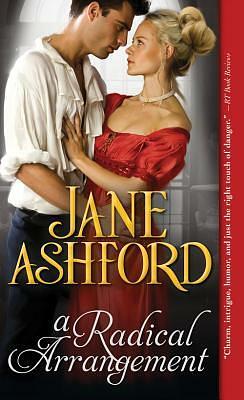
Title: A Radical Arrangement
Author: Jane Ashford
Genre: Historical Romance
Format: eBook
Publication Date: 2019
Publisher: Sourcebooks Casablanca
Opening Thoughts on A Radical Arrangement
At first, A Radical Arrangement seems like your typical Regency setup — a sheltered young woman, a wealthy bachelor with a reputation, and expectations closing in around them. But instead of quietly complying, the heroine runs. That choice — more than any misunderstanding or rumor — is what really starts the story.
General Impressions
In many ways, this is a very traditional Regency romance. There are misunderstandings, overbearing family expectations, reputations to navigate, and the looming risk of scandal. But what sets this story apart is how evenly the character growth is handled.
Margaret begins the novel with a fairly sheltered worldview, shaped by privilege and family rhetoric. As the story unfolds — particularly during Justin’s recovery — she’s gradually exposed to perspectives she’s never truly considered. Conversations about reform, responsibility, and poverty are woven into the narrative, sometimes more directly than readers looking for pure escapism might prefer. But they aren’t dropped in for shock value; they grow organically from Justin’s convictions and Margaret’s willingness to listen.
What I appreciated most was that her change doesn’t happen all at once. It begins with questions, deepens through reading and discussion, and finally solidifies when she sees the reality of hardship firsthand. At the same time, Justin is forced to confront his own assumptions — particularly about aristocratic women and what they are capable of understanding.
Instead of one character reforming the other, they expand each other’s worlds.
Characters & Connections in A Radical Arrangement
In many ways, this is a very traditional Regency romance. There are misunderstandings, overbearing family expectations, reputations to navigate, and the looming risk of scandal. But what sets this story apart is how evenly the character growth is handled.
Margaret begins the novel with a fairly sheltered worldview, shaped by privilege and family rhetoric. As the story unfolds — particularly during Justin’s recovery — she’s gradually exposed to perspectives she’s never truly considered. Conversations about reform, responsibility, and poverty are woven into the narrative, sometimes more directly than readers looking for pure escapism might prefer. But they aren’t dropped in for shock value; they grow organically from Justin’s convictions and Margaret’s willingness to listen.
What I appreciated most was that her change doesn’t happen all at once. It begins with questions, deepens through reading and discussion, and finally solidifies when she sees the reality of hardship firsthand. At the same time, Justin is forced to confront his own assumptions — particularly about aristocratic women and what they are capable of understanding.
Instead of one character reforming the other, they expand each other’s worlds.
Plot & Pacing
This is very much a character-driven story. The external events — the scandal, the flight, the injury, the recovery at a seaside inn — all serve one primary purpose: forcing Margaret and Justin into situations where they have to confront themselves as much as each other.
The pacing slows considerably once they arrive at the inn, and that’s intentional. Justin’s recovery isn’t glossed over, and the extended time in close quarters allows for conversations, small realizations, and gradual shifts in perspective. Readers looking for a fast-moving, twist-heavy romance might find it measured, but for me, that slower stretch is where the heart of the story lives.
That’s not to say the plot lacks memorable moments. There are dramatic turns and uniquely Regency complications that keep things lively. But ultimately, the events exist to create space for growth — and in a romance built on mutual change, that feels exactly right.
Themes & Resonance
At its core, A Radical Arrangement is about perspective — who shapes our beliefs, and what happens when we begin to question them.
The political reform element never drives the plot in a heavy-handed way, but it’s woven deeply into the emotional arc of the romance. Margaret’s growth isn’t about adopting a new ideology overnight; it’s about slowly learning to look beyond what she’s always been told. Her shift feels rooted in conversation, exposure, and lived experience rather than sudden transformation.
What I appreciated most is that these tensions remain grounded in the personal. The story keeps its focus on how ideas affect relationships, assumptions, and individual choices rather than turning into a broader treatise. Justin’s convictions matter, but so does his willingness to reconsider his own assumptions — particularly about Margaret.
In the end, the romance feels built not just on attraction, but on expanded understanding.
Mood & Vibe: Who This Regency Romance is For
This is a traditional Regency romance in structure, but with more depth than I usually expect from the setup. The small seaside village setting and extended forced proximity give parts of the story a quiet, almost cozy atmosphere. The pace is gradual, allowing conversations and realizations to unfold naturally rather than relying on constant dramatic escalation.
Readers looking for a fast-moving, high-drama romance might find it measured. But if you enjoy slow-burn growth, thoughtful character development, and a Regency world that feels a little more textured beneath the surface, this one delivers.

Final Takeaway on A Radical Arrangement
A Radical Arrangement leans into the familiar comforts of Regency romance — scandal, misunderstandings, parental pressure — but gives its central relationship room to breathe and mature. What makes it memorable isn’t a dramatic twist or sweeping gesture, but the steady way Margaret and Justin learn to see each other, and the world around them, more clearly.
For readers who appreciate character-driven romance and gradual, earned growth, this is a satisfying and quietly thoughtful addition to the genre.

If A Radical Arrangement sounds like your kind of Regency romance, you can find a copy here:
This post contains affiliate links. If you choose to purchase through them, I may earn a small commission at no additional cost to you.